
An anti sandbagging provision is defined as a contract clause that bars a buyer from claiming indemnification for a seller's breach that the buyer knew about before the deal closed. This seller-friendly mechanism sits at the heart of risk allocation in mergers and acquisitions, and its legal effect varies sharply depending on the governing law. According to American Bar Association survey data, only 5% of deals include an express anti-sandbagging clause, while 76% remain silent and 19% include a pro-sandbagging clause. That silence is not neutral. For businesses and legal professionals in Singapore and across APAC, understanding how courts fill that gap is critical to protecting your position at the negotiating table.
What is an anti sandbagging provision and how does it work?
An anti sandbagging provision operates by cutting off a buyer's indemnification rights when the buyer had prior knowledge of the breach. The logic is straightforward: if you knew about the problem before signing, you accepted the risk by proceeding with the deal. That principle sounds fair in theory, but its application depends entirely on how "knowledge" is defined and which jurisdiction governs the contract.
The clause is inherently seller-friendly, shifting disclosure risk back to buyers and limiting post-closing claims. Sellers prefer it because it removes the threat of a buyer who discovers a problem during due diligence, says nothing, closes the deal, and then sues for indemnification after the fact. That tactic is what practitioners call "sandbagging," and the anti-sandbagging clause is the contractual defense against it.

The clause typically appears in the indemnification section of a Share Purchase Agreement (SPA) or Asset Purchase Agreement. Its precise wording determines everything. A broadly drafted clause may bar claims based on constructive knowledge, meaning what the buyer "should have known." A narrowly drafted clause restricts the bar to actual, documented knowledge of named individuals.
Jurisdictional approaches: a comparison
The legal effect of silence on sandbagging varies dramatically by jurisdiction. The table below captures the key differences relevant to APAC practitioners structuring cross-border deals.
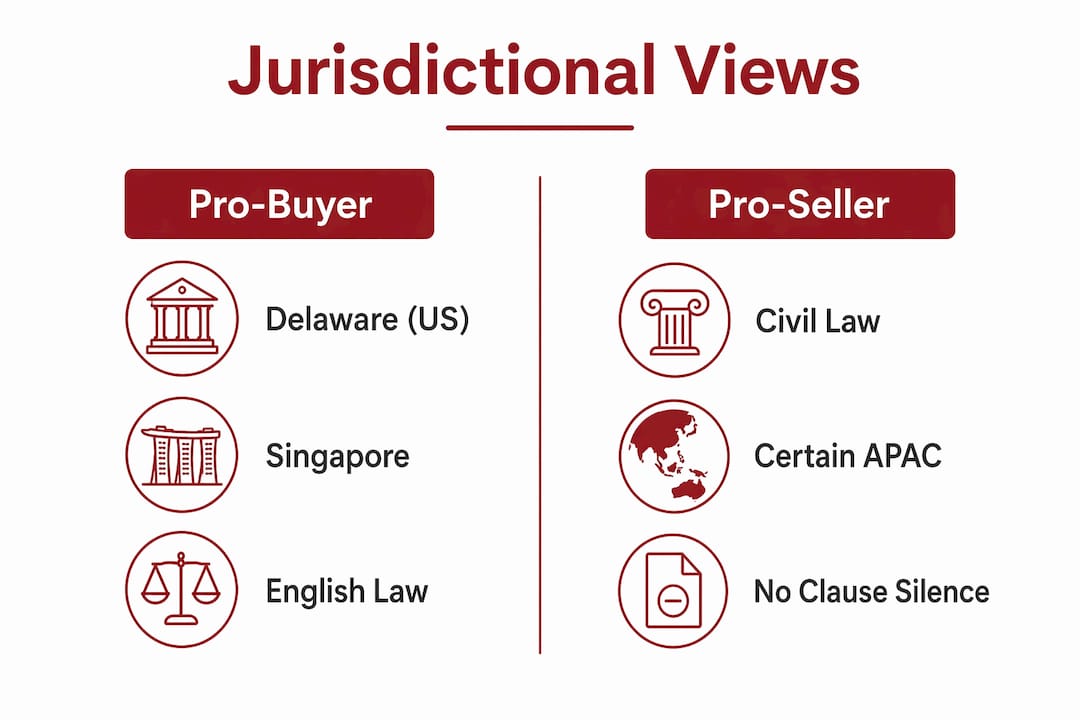
| Jurisdiction | Default stance | Key driver |
|---|---|---|
| Delaware (US) | Pro-buyer (sandbagging allowed) | Freedom of contract; case law including Cobalt International Energy v. Eni |
| New York (US) | Ambiguous | No clear default; courts look to contract language |
| Civil law systems (e.g., Germany, Japan) | Pro-seller (anti-sandbagging implied) | Good faith doctrines limit opportunistic claims |
| Singapore (common law) | Pro-buyer absent express clause | Follows English common law; freedom of contract |
| APAC civil law jurisdictions | Pro-seller | Good faith and equitable principles steer courts toward sellers |
Delaware case law, including Akorn v. Fresenius, confirms that buyers may pursue claims even with prior knowledge unless the contract expressly says otherwise. Singapore, as a common law jurisdiction, generally follows a similar freedom-of-contract approach. Civil law jurisdictions across APAC, however, lean toward the seller under good faith principles, even without an express clause.
Pro Tip: When drafting cross-border deals governed by Singapore law but involving counterparties from civil law jurisdictions, include an express clause rather than relying on the governing law default. Silence creates litigation risk on both sides.
What are the key negotiation points in anti sandbagging clauses?
Negotiating an anti sandbagging clause requires precision on three fronts: the definition of knowledge, the scope of who counts as "the buyer," and the carve-outs that survive the clause regardless of what the buyer knew.
Actual versus constructive knowledge
The knowledge definition is the most contested element in any sandbagging negotiation. Actual knowledge means a specific person was aware of a specific fact. Constructive knowledge means the buyer "should have known" based on information available during due diligence. Sellers push for constructive knowledge because it is broader and harder for buyers to disprove. Buyers push for actual knowledge because it is narrower and requires the seller to prove a named individual was specifically aware.
Restricting the knowledge definition to actual knowledge of named individuals reduces disputes and gives both parties a clearer post-closing baseline. Vague definitions invite litigation.
Who counts as "the buyer"?
The clause must specify whose knowledge triggers the bar. Options range from the entire buyer organization to a defined deal team of named individuals. A narrower definition protects the buyer. A broader definition protects the seller. Most negotiated deals settle on a defined group of senior deal team members with actual knowledge.
Common carve-outs
Sophisticated contracts carve out the following from the anti-sandbagging effect, regardless of buyer knowledge:
- Actual fraud by the seller
- Intentional misrepresentation
- Matters fairly disclosed in the disclosure schedules
- Fundamental representations such as title, authority, and capitalization
- Tax indemnities, which often carry separate treatment
These carve-outs matter because they preserve the buyer's ability to claim on the most serious seller misconduct, even if the buyer had some awareness of the underlying issue.
Pro Tip: Negotiate the fraud carve-out explicitly. Some sellers try to limit it to "criminal fraud," which is a much higher bar. Insist on "fraudulent misrepresentation" as the standard, which covers deliberate deception in civil proceedings.
How do anti sandbagging clauses interact with disclosure schedules and W&I insurance?
The relationship between an anti sandbagging clause and the disclosure schedules is one of the most misunderstood dynamics in M&A drafting. The two mechanisms serve different functions and must be read together carefully.
Disclosure schedules operate independently of sandbagging language. A fact that is fairly disclosed in the schedules defeats an indemnification claim regardless of whether an anti-sandbagging clause exists. The anti-sandbagging clause only governs residual breaches: those not covered by the schedules but known to the buyer through other means, such as due diligence findings, management presentations, or data room materials.
The practical implication is significant. A buyer who discovers a problem in due diligence but does not see it reflected in the disclosure schedules faces a choice: request a schedule update, renegotiate the price, or proceed and accept the risk. An anti-sandbagging clause removes the fourth option, which is to proceed silently and sue later.
Warranty and indemnity (W&I) insurance adds another layer of complexity. W&I policies typically exclude known breaches from coverage. If the SPA's knowledge definition and the insurance policy's knowledge definition do not align, a gap opens up. The seller may believe the anti-sandbagging clause protects them. The insurer may deny coverage because the buyer's knowledge base under the policy is defined differently. The result is a financial exposure that neither party anticipated.
Best practices for drafting to manage this interaction:
- Define "knowledge" identically in the SPA and the W&I insurance policy.
- Specify the cut-off date for knowledge, typically the signing date or the closing date.
- Limit last-minute disclosure schedule updates to prevent sellers from manufacturing constructive knowledge.
- Require the insurer to confirm in writing that the sandbagging language in the SPA does not create a coverage exclusion.
- Address the treatment of due diligence reports explicitly: state whether findings in those reports constitute "knowledge" for the purpose of the clause.
Aligning SPA and insurance terms is not optional in deals where W&I insurance is a primary risk transfer mechanism. Misalignment is one of the most common sources of post-closing disputes in APAC transactions.
What practical risks should APAC businesses watch for?
APAC deals carry specific sandbagging risks that practitioners in Singapore and neighboring jurisdictions encounter regularly. Understanding them before you sign is far more effective than litigating them afterward.
The most common seller tactic is the document dump before closing. A seller floods the data room with thousands of pages of documents in the final days before closing. The goal is to create constructive knowledge of disclosed problems, shielding the seller from post-closing claims. Buyers who do not address this in the contract are exposed.
Civil law and good faith doctrines in many APAC jurisdictions steer courts toward seller protection even without an express clause. That means a buyer operating under a silent contract in a civil law APAC jurisdiction may find their indemnification claim rejected on good faith grounds. For cross-border M&A counsel advising on deals spanning multiple APAC jurisdictions, this is a live risk.
Practical steps to protect your position:
- Include an express sandbagging or anti-sandbagging clause. Do not rely on silence.
- Define "knowledge" by reference to named individuals and actual awareness.
- Set a hard deadline for disclosure schedule updates, at least five business days before closing.
- Require the seller to certify that no material new information has been added to the data room after a specified date.
- Align the W&I insurance knowledge definition with the SPA definition before binding coverage.
- Include a risk allocation clause that addresses how undisclosed due diligence findings are treated post-closing.
The legal split on sandbagging stems from the tension between freedom of contract and good faith doctrines. That tension does not resolve itself. Explicit negotiation is the only reliable answer.
Key Takeaways
An anti sandbagging provision is only as effective as its drafting: vague knowledge definitions and misaligned insurance terms create the disputes the clause was designed to prevent.
| Point | Details |
|---|---|
| Define knowledge precisely | Restrict the clause to actual knowledge of named deal team members to reduce post-closing disputes. |
| Express clauses beat silence | Silent contracts leave outcome to jurisdiction defaults, which vary sharply across APAC. |
| Carve out fraud and misrepresentation | Always preserve buyer claims for intentional seller misconduct regardless of prior knowledge. |
| Align SPA and W&I insurance | Mismatched knowledge definitions between the contract and the policy create uninsured exposure. |
| Control disclosure schedule timing | Set a hard deadline for schedule updates to prevent last-minute document dumps by sellers. |
Why silence on sandbagging is a risk you cannot afford
I have reviewed a significant number of cross-border SPAs where the sandbagging position was simply left blank. The parties assumed the governing law would sort it out. In Singapore, that assumption generally favors the buyer. In a deal with a Japanese or Korean counterparty governed by local law, the same silence can produce the opposite result. The asymmetry is not theoretical. It shows up in post-closing arbitration.
The knowledge definition is where deals are actually won and lost on this issue. I have seen sellers argue that a buyer's receipt of a due diligence report constitutes constructive knowledge of every finding in it, even findings buried in footnotes. Courts in some jurisdictions have accepted that argument. Narrowing the knowledge definition to actual awareness of specific named individuals is not a minor drafting preference. It is a material risk management decision.
W&I insurance has changed the negotiating dynamic considerably. Buyers increasingly accept anti-sandbagging language because they expect the insurer to cover the gap. That logic only holds if the policy and the SPA use the same knowledge standard. When they do not, the buyer has given up a contractual right and received no insurance protection in return. That is a bad outcome that careful drafting prevents.
My consistent advice to clients in Singapore and across APAC is this: negotiate the sandbagging position explicitly, define knowledge narrowly, carve out fraud without qualification, and confirm insurance alignment before signing. Leaving any of those four elements to chance is a choice you are unlikely to make twice.
— HL
How Beyondhorizons supports complex contract negotiations
Beyondhorizons advises businesses and legal teams across Singapore and APAC on the full range of corporate transaction risks, including sandbagging provisions, disclosure mechanics, and W&I insurance alignment. The firm's lawyers come from Magic Circle and US white shoe backgrounds and are ranked on Chambers, Legal 500, and Asia Legal Business.

Whether you are a buyer structuring indemnification protections or a seller managing disclosure risk, Beyondhorizons brings the depth and commercial judgment that complex cross-border deals require. The team's corporate transactions practice covers SPA negotiation, risk allocation, and post-closing dispute prevention across multiple APAC jurisdictions. For deals where the governing law and the insurance terms need to align precisely, Beyondhorizons delivers the commercial contracts counsel to get it right before signing.
FAQ
What does an anti sandbagging provision do?
An anti sandbagging provision bars a buyer from claiming indemnification for a seller's breach that the buyer knew about before closing. It is a seller-protective clause that limits post-closing claims based on pre-closing knowledge.
Is an anti sandbagging clause common in M&A deals?
Express anti-sandbagging clauses appear in only 5% of surveyed deals, with 76% of contracts silent on the issue. Silence is not neutral: the outcome depends on the governing law and jurisdiction.
How does Singapore law treat sandbagging?
Singapore follows English common law principles and generally permits sandbagging absent an express clause, favoring freedom of contract. Parties should include an express clause to avoid uncertainty, particularly in cross-border deals.
What is the biggest drafting risk in anti sandbagging clauses?
The biggest risk is a vague knowledge definition. Broad constructive knowledge standards expose buyers to claims they cannot disprove, while misalignment between the SPA and W&I insurance policy creates uninsured gaps.
Can sellers use disclosure schedules to trigger anti sandbagging protections?
Sellers sometimes use last-minute disclosure schedule updates to create constructive knowledge and shield themselves from claims. Buyers should set a hard deadline for schedule updates in the contract to prevent this tactic.